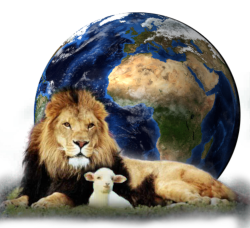
The 7 Feasts of Yahweh
They are the Holy Convocations of Yahweh, remembering His great acts of salvation in the history of His people. Everything that Elohim did or revealed in the Old Testament was given as a shadow or an example of His finished plan of redemption. Each feast foreshadows a unique part of Elohim’s redemption story. Each feast is a complete message in itself, yet fits into the total picture in such a way that it would be incomplete to let it stand alone.
The term feasts in Hebrew (HaMoyadim) literally means "appointed times." These feasts are often called "holy convocations” (translated “rehearsal”) and are intended to be a time of meeting between Elohim and man for "holy purposes." Since these seven feasts of Yahweh are "appointed times" for "set-apart purposes," they carry with them great sacredness and solemnity. Even, Yeshua, our Master kept every one of them without fail, including Passover on His last earthly night.
Leviticus 23:4 “‘These are Yahweh’s appointed feasts, the sacred assemblies you are to proclaim at their appointed times:
There are a total number of seven feasts of Yahweh. Seven is the biblical number for completion. It is recorded in Genesis chapter two verse two and three, that Elohim rested on the seventh day after creating the heavens and the earth, not due to fatigue but rather to emphasize completion and satisfaction. Also, the day begins at sunset and ends at sunset according to the account in Genesis.
1. Passover — Leviticus 23:4-8
This feast remembers the last plague in Egypt, when the angel of death “passed over” the children of Israel who applied the blood of the lamb to their doors. The Israelites took a bundle of hyssop and dipped it into the blood in the basin at the threshold.
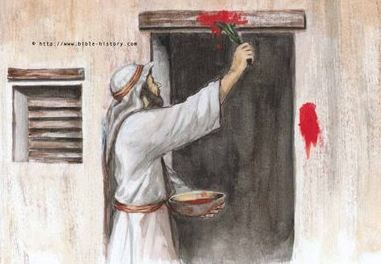
Passover is the feast of Salvation. In both testaments, the blood of the Lamb delivers from slavery – the Israelites from Egypt and us from sin.
That is why John the Baptist looking at Yeshua said, “Look! The Lamb of God who takes away the sin of the world!”
(John 1:29, NLT), he understood the Old Testament reference.
Passover is to be observed on the 14th day of the first month at twilight, which is the evening ending the 14th day.
In the New Testament, we see that Yeshua — born in a stable, visited by shepherds and led to the slaughter — is that lamb sent for us. The Last Supper was indeed a Passover meal, citing gospel accounts where the disciples prepared the Passover at Yeshua's instruction and they ate it at the correct time, in the evening. His death allows the judgment we deserve to pass over us.
When we accept Messiah, we accept the loving gift of a second chance — because of His death on the cross, we have a clean slate!
2. Unleavened Bread — Leviticus 23:6
This seven-day feast begins on the day following the start of Passover, in which the Israelites left Egypt in haste and there was no time to add yeast to their bread. Hence, Yahweh memorialized the event with the commandment to eat only unleavened bread for seven days
(Deut.16:3) to remind them of the hardship in Egypt and how Elohim freed them from captivity.
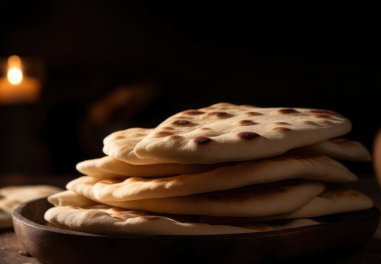
Leaven often represents sin and decay in the Bible. Once incorporated, yeast becomes an inseparable part of the bread; the same is true for sin’s effect on our lives.
The Jews were constantly sacrificing unblemished animals to temporarily atone for sin. Only the Messiah, the perfect sinless sacrifice, could offer a permanent solution.
The unleavened bread represents Yeshua’ sinless life; He is the only perfect sacrifice for our sins.
In
John 6:35, Yeshua boldly states that He is the bread of life. Not only does He remove our sins, He nourishes our souls!
3. Firstfruits — Leviticus 23:10
The Feast of First Fruits is one of three Jewish harvest feasts to thank and honour Elohim for all He provided. Although they didn’t know it at the time, the children of Israel were celebrating what would become a very important day.
.jpg)
The priests sacrificed Passover lambs on the 14th day of the month of Nisan, and the first day of Passover was the 15th. The Feast of First Fruits was celebrated the third day, the 16th of Nisan. This “third-day” celebration was the same day that Yeshua was resurrected from the dead.
In
1 Corinthians 15:20 Paul refers to Yeshua as the first fruits of the dead. He represents the first of the great harvest of souls — including you — that will resurrect to eternal life because of the new covenant in His blood
(Luke 22:20).
4. Feast of Weeks or Pentecost — Leviticus 23:16
This feast is the second of the three harvest feasts. It occurs exactly seven weeks after the Feast of Firstfruits, so it’s also called Pentecost which means “50 days.”
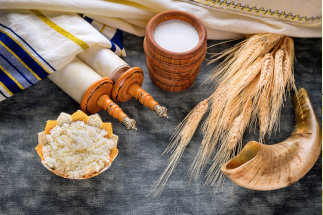
Traditionally, people were expected to bring the first harvest of grain to Yahweh including two leavened loaves of bread.
Leavened bread
Elohim’s plan to save souls included more than the Jews. Through Yeshua, this plan was revealed. In
Matthew 9:37 Yeshua tells His disciples that “the harvest is great, but the workers are few.”
Yeshua tells His disciples in
Luke 24: 49 and
Acts 1: 4 to wait in Jerusalem for the promise of His Father.
That arrival was the day of Pentecost — and the harvest began with 3,000 souls. The message spread to both Jews and Gentiles (the two leavened loaves of bread), extending the harvest to us!
Today, Bible translation continues this harvest, enabling more people to read, speak and understand the gospel message in a language that touches their hearts.
Nevertheless, there are some common problems during the translation of the Hebrew Scriptures into Greek. For example, in the Gospels we often read, “the feast of the Jews.” The text seems to prove in the New Testament that the feast was only for the Jews.
However, that is not true. Why would a Jewish writer, writing for the mostly Hebrew church, insert the word Jewish into the text? He and his audience grew up with the Feasts. They knew that they were the Feasts of YAHWEH because the Torah told them so.
Besides, there was no such word as ‘Jew’ during those times. The Greek translators, though fluent in Hebrew and Greek were not Jews and inserted words or passages into the text to clarify their intent. This is an example of how error has entered into the modern translations.
So, the first four feast that we spoke in the above passages are: Passover, Unleavened Bread, First fruits, and Weeks.
5. Feast of Trumpets — Leviticus 23:24
Elohim commands His people to gather and to commemorate the decree with trumpet blasts.
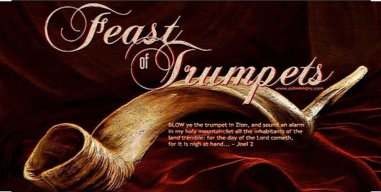
On the same front, the sound of a trumpet is also associated with the last trumpet, which is the second return of Yeshua
(1 Corinthians 15:52). Once He returns, there will be a wedding feast of celebration.
Revelation 19:9 says, “Blessed are those who are invited to the wedding feast of the Lamb” (NLT). He’s preparing us to celebrate!
6. Day of Atonement — Leviticus 16, 23:26-32
To make “atonement” is to make restitution for wrongs committed. As a day of humility and repentance to Elohim, it was a time for all of us to get hearts, consciences and lives right before Him.
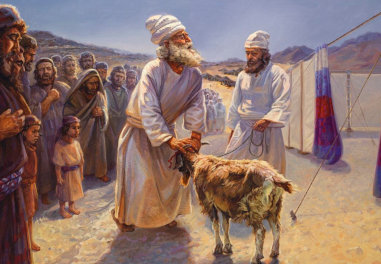
The observance involved the sacrifice of animals as the High Priest entered the Holy of Holies. What the High Priest did there couldn’t offer more than an annual payment for their sins.
However, hiding in plain sight was the promise of One who could atone for our sins permanently
(Hebrews 9:12) – Yeshua the ultimate sacrifice, high priest, and provision for sin.
Lamb
Where is Yeshua in these sacrificed animals? The bull and one of the goats were an offering of thanks, but the “scapegoat” took on their sins
(Leviticus 16:10). The scapegoat was to be burdened with all the sins of Israel and sent into the wilderness.
The Jewish leaders condemned Yeshua, and He — burdened with the sins of all mankind — was led out of the city to be crucified: “He Himself is the sacrifice that atones for our sins — and not only our sins but the sins of the world”
(1 John 2:2, NLT).
7. Feast of Tabernacles or Sukkot — Leviticus 23:34
Celebration always follows the Day of Atonement. The Feast of Tabernacles celebrates Elohim’s provision and protection for the people of Israel during their 40 years of wandering in the wilderness; for the seven days of the feast, people live in temporary structures like they did in the wilderness.
Yahweh, Himself was with the Israelites in the desert, in a tented temple called the Tabernacle, so the feast also celebrates His presence as He tabernacles (dwells) with us.
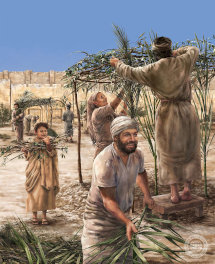
Yeshua is called Emmanuel, meaning “Elohim (God) is with us”
Matt 1:23. He put on a temporary tabernacle — a human body — to dwell on this earth and offer Himself as a sacrifice.
This act of divine love and sacrifice was not just for a select few but for all humanity.
This feast also points to the promise that Elohim will return and reign with His people. His return is the ultimate fulfillment of the hope we’ve carried our entire lives. What a day that will be!
As the four spring feasts were fulfilled literally and right on schedule in connection with Messiah's first coming, these three fall feasts
(Trumpets, Day of Atonement, and Tabernacles) will likewise be fulfilled literally and right on schedule in connection to the Messiah's second coming.
The seven feasts together are Elohim’s redemption plan and the world will be His kingdom when the last curtain of the Feast of Tabernacles is lifted.
*Yahweh is the Name of the Most High God, the Creator
*Yeshua is the Name of the Son of the Most High God.
*Elohim is the Hebrew word for God.